Stairs can become one of the biggest obstacles to comfortably using a multilevel home. In Wantagh, where many residents want to continue enjoying familiar homes and neighborhoods as their mobility needs change, a stairlift can make movement between floors safer, easier, and less physically demanding.
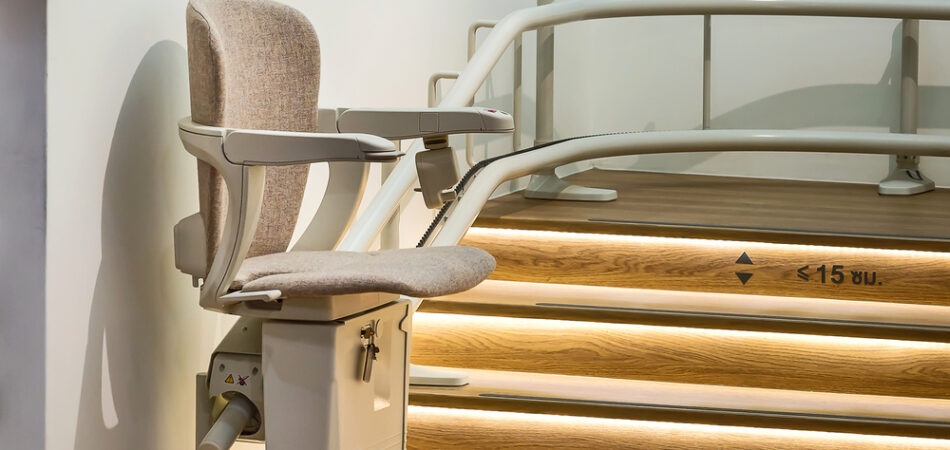
A stairlift improves home accessibility by providing a powered seat that carries a person along a staircase. For someone who has difficulty climbing stairs because of limited mobility, balance concerns, fatigue, or changing physical abilities, it can preserve access to bedrooms, bathrooms, and other important living spaces without requiring a major change to the home’s layout.
What local homeowners should know
-
Stairlifts can help residents continue using multiple levels of their homes when climbing stairs becomes difficult.
-
Both straight and curved staircases may have stairlift options, although the appropriate solution depends on the staircase and individual needs.
-
Wantagh homeowners should consider staircase dimensions, landing space, user mobility, and household traffic when evaluating a lift.
-
Homes throughout Nassau County vary in age, floor plan, and staircase configuration, so an in-home assessment can help determine what will work.
-
A stairlift is intended to improve access between floors, but it does not replace every other accessibility modification a person may need.
Why Stairlift Accessibility Matters in Wantagh Homes
Stairlift accessibility matters in Wantagh because it can help residents continue using the full layout of a multilevel home when stairs become difficult or uncomfortable to navigate. Instead of avoiding an upstairs bedroom, downstairs living space, or other part of the house, a resident may be able to move between levels with less physical effort.
Wantagh is part of the established residential landscape of Nassau County, alongside communities such as Bellmore, Seaford, Massapequa, and Merrick. Local houses can have very different configurations, from compact stairways to larger multilevel layouts.
That variation matters. Accessibility is not simply about deciding that a stairlift sounds useful. The staircase itself, available space at each landing, the needs of other household members, and the person using the equipment all influence the right approach.
Long Island Stairlifts helps local residents explore stairlift options for their homes. We focus on helping homeowners understand how a lift can fit their staircase and support easier movement between floors.
Local Data or Field Observations
Local stairlift planning should be based on the actual home and staircase rather than assumptions about how houses in the area are configured. Even neighboring Wantagh properties can have different stair widths, turns, landings, railings, and surrounding obstacles that affect accessibility planning.
Without verified project data supplied for this article, it would not be appropriate to claim that one staircase type or mobility concern is most common locally.
From a practical accessibility standpoint, the most useful evaluation considers the complete path. That includes approaching the stairs, getting onto the stairlift, traveling between floors, getting off safely, and moving away from the landing.
How a Stairlift Can Affect Daily Life at Home
A stairlift can make daily life easier by reducing the need to repeatedly climb a staircase that has become a mobility barrier. For Wantagh residents, that can restore practical access to rooms that might otherwise become difficult to reach.
Consider a home with bedrooms upstairs and the kitchen and living room downstairs. If climbing the stairs is exhausting or uncomfortable, routine activities can start requiring significant planning.
Improved access can also affect the rest of the household. Family members may feel less pressure to physically assist someone on every trip between floors, while the stairlift user may have a more practical way to move around the home.
The goal is not simply getting from the bottom of the staircase to the top. It is making more of the existing home usable.
Warning Signs That Stairs Are Becoming an Accessibility Problem
Signs that stairs are becoming an accessibility problem include avoiding certain floors, needing frequent assistance, experiencing significant fatigue, or feeling increasingly uncomfortable while climbing. These changes can indicate that it is time to evaluate whether the staircase still supports the resident’s everyday needs.
Watch for signs such as:
-
Regularly avoiding upstairs or downstairs rooms because of the stairs.
-
Depending on another person to help with routine trips between floors.
-
Taking unusually long breaks before or after using the staircase.
-
Having difficulty carrying everyday items while navigating stairs.
-
Using walls, railings, or nearby surfaces for additional support.
-
Changing sleeping or bathing routines to avoid another floor.
-
Feeling uncertain about reaching or leaving a staircase landing.
These signs do not automatically mean a stairlift is the only solution. They do suggest that the home’s accessibility deserves closer attention.
When to Call a Stairlift Professional
Homeowners should contact a stairlift professional when stair use is limiting access to important parts of the home or when they need to know whether a lift will fit their staircase. A professional assessment can address questions that cannot be answered accurately from general measurements or online information alone.
Residents can safely begin by identifying which floors are becoming difficult to access and observing where the greatest challenges occur.
Equipment selection and installation require more specific evaluation. Staircase dimensions, curves, landings, obstructions, seating needs, and the user’s ability to get on and off the lift should all be considered.
For a Wantagh homeowner, an assessment also provides an opportunity to discuss how other people will continue using the staircase after the equipment is installed.
Common Reasons Wantagh Residents Consider Stairlifts
The most common reasons to consider a stairlift involve mobility changes, difficulty navigating stairs, and a desire to keep important rooms accessible. The specific reason differs by household, which is why the resident’s needs should guide the decision rather than the equipment alone.
1. Changing mobility
A resident who once climbed stairs easily may find that the same trip now requires substantially more effort.
2. Balance or stability concerns
Someone who feels uncertain while navigating steps may begin limiting how often they travel between floors.
3. Fatigue
Even when a person can physically climb stairs, doing so repeatedly can make a multilevel home less practical.
4. Keeping an existing home functional
For residents who value their Wantagh home, familiar neighborhood, and existing routines, improving accessibility can be one way to adapt the property to changing needs.
Planning for Long-Term Accessibility
Long-term accessibility planning means considering how the stairlift will fit both current mobility needs and everyday household use. Wantagh homeowners should look beyond the immediate difficulty with stairs and consider the complete path between frequently used rooms.
Start by identifying which areas of the house must remain accessible. Bedrooms, bathrooms, kitchens, laundry areas, entrances, and primary living spaces may be located on different levels.
Homeowners can also remove unnecessary clutter near stairways and keep approaches to landings clear. These simple steps can improve the usability of the surrounding area, but they do not replace proper equipment evaluation.
DIY modifications to powered accessibility equipment should be avoided. Stairlift installation and equipment-related adjustments should be handled according to the requirements of the specific system.
What Results Can You Expect From a Stairlift?
A properly selected stairlift can provide a more convenient way to travel between floors while reducing reliance on physically climbing every step. The practical result for a Wantagh household depends on the staircase, equipment configuration, user’s abilities, and accessibility of the surrounding spaces.
A stairlift does not automatically make an entire house accessible. A resident may still encounter barriers at entrances, bathrooms, narrow doorways, or other areas.
That is why realistic expectations matter. The lift solves a specific problem: movement along the staircase. For households where the stairs are the primary barrier, addressing that problem can make a meaningful difference in how the home functions.
Common Stairlift Planning Mistakes
Common stairlift planning mistakes include focusing only on the staircase, choosing equipment before assessing the user, and overlooking how other household members use the space. A better approach considers the entire accessibility situation.
Mistake: Choosing based only on price.
Consequence: The equipment may not be the best match for the staircase or user.
Better approach: Compare suitability, configuration, usability, and cost together.
Mistake: Measuring only stair width.
Consequence: Important landing or clearance issues may be overlooked.
Better approach: Evaluate the full staircase and surrounding areas.
Mistake: Ignoring other household members.
Consequence: The staircase may become less convenient for people who continue using it on foot.
Better approach: Discuss how everyone uses the stairs.
Mistake: Waiting until part of the house is rarely used.
Consequence: Accessibility decisions may become more urgent and stressful.
Better approach: Explore options when stair use first begins affecting everyday routines.
A Common Wantagh Home Accessibility Scenario
A common local scenario involves a resident who can still use the stairs but gradually begins avoiding unnecessary trips between floors. This is an illustrative Wantagh scenario, not a Long Island Stairlifts customer case study.
Imagine a homeowner whose bedroom is upstairs while most daytime activities take place on the main floor. Climbing the staircase becomes increasingly tiring, so the resident starts planning the entire day around minimizing trips.
In that situation, evaluating a stairlift before the upper floor becomes effectively inaccessible can provide the household with time to compare options and understand the installation process.
Stairlift Solutions for Different Home Layouts
Stairlift solutions can accommodate different staircase layouts, but the correct equipment depends on the shape and dimensions of the actual stairs. Homes in Wantagh and surrounding Nassau County communities should therefore be evaluated individually.
A straight staircase generally presents different equipment requirements than stairs with curves, intermediate landings, or changes in direction. The available space at the top and bottom also matters.
We can help homeowners explore which stairlift approach is appropriate for their particular layout and accessibility goals.
Comparing Your Stairlift Options
The best stairlift option is the one that matches the staircase, user’s mobility needs, available space, and household routine. Comparing options based only on appearance or initial cost can overlook practical differences that affect everyday use.
Straight and curved staircases typically require different configurations. Residents should also consider seating, controls, how the lift is entered and exited, and how much usable staircase space remains.
A professional evaluation can narrow those choices based on the actual home rather than forcing a generic solution onto a unique staircase.
Stairlift Service Areas Around Wantagh
Stairlift service in the Wantagh area can support homeowners throughout this part of Nassau County who are looking for easier access between floors. Nearby communities include Bellmore, Seaford, Merrick, Massapequa, and Levittown.
Local housing layouts vary considerably, so the appropriate stairlift solution should always be based on the individual property rather than its ZIP code or neighborhood alone.
The Cost of Ignoring a Growing Staircase Barrier
Ignoring a growing staircase accessibility problem can gradually limit how much of the home a resident comfortably uses. In a multilevel Wantagh home, that may mean avoiding bedrooms, bathrooms, storage areas, laundry spaces, or living areas located on another floor.
Waiting can also leave less time to research solutions if mobility changes quickly.
Addressing the issue earlier allows homeowners and family members to evaluate their needs, understand available options, and make a more considered decision without unnecessary pressure.
Frequently Asked Questions About Stairlifts in Wantagh
Can a stairlift be installed in a Wantagh home with a narrow staircase?
A stairlift may be possible on a narrower staircase, but suitability depends on the staircase dimensions, equipment, user, and required clearance. An on-site evaluation is the best way to determine whether a particular Wantagh staircase provides enough usable space for both the lift and other household members.
Can stairlifts work on curved staircases?
Yes, stairlift solutions can be available for curved staircases, although they require a configuration designed for the staircase’s specific path. Turns, intermediate landings, and changes in direction make accurate assessment particularly important. The exact solution should be based on the home’s staircase rather than a generic layout.
Are stairlifts only for older Wantagh residents?
No, stairlifts are not exclusively for older adults. They can be considered by anyone whose mobility makes stairs difficult to navigate. Age alone does not determine whether a lift is appropriate. The more useful questions involve the person’s mobility, staircase, daily routine, and ability to use the equipment appropriately.
Will a stairlift make my entire Nassau County home accessible?
A stairlift addresses access along a staircase, but it does not automatically remove every accessibility barrier in a home. Doorways, bathrooms, entrances, floor transitions, and other areas may still need consideration. Homeowners should evaluate the complete route between important living spaces rather than viewing the stairs in isolation.
How do I know which stairlift fits my Wantagh staircase?
The appropriate stairlift is determined by your staircase configuration, available space, mobility needs, and how the equipment will be used. Straight stairs, curved stairs, landings, and surrounding obstacles can require different solutions. A professional assessment provides information specific to the staircase instead of relying on general product assumptions.
Should I consider a stairlift before stairs become impossible to use?
Yes, evaluating a stairlift before stairs become completely unusable can give you more time to understand and compare your options. If a Wantagh resident is already avoiding floors, relying heavily on assistance, or reorganizing daily routines around the staircase, it may be useful to investigate accessibility solutions.
Can other family members still use the staircase?
Other household members may still be able to use the staircase, depending on its dimensions and the stairlift configuration. This is an important consideration in homes where several people regularly travel between floors. Available clearance should be evaluated as part of the planning process.
Why is an in-home stairlift assessment useful in Nassau County?
An in-home assessment allows the staircase, landings, surrounding space, and resident’s accessibility needs to be evaluated together. Because Nassau County homes have varied layouts, general measurements cannot answer every installation question. Seeing the actual environment helps identify which options deserve further consideration.
Make More of Your Wantagh Home Accessible
A staircase does not have to determine which parts of your home remain practical to use. By evaluating the resident, staircase, landings, and daily routine together, we can help local homeowners understand their options for improving access between floors.
Keep Every Floor of Your Wantagh Home Within Reach
Explore a stairlift solution designed around your home, staircase, and accessibility needs.