For many Long Island residents, staying in a familiar home is an important part of maintaining independence. Yet in the Cape-style homes, Colonials, split-levels, and other multi-story houses found throughout Nassau and Suffolk counties, stairs can become a significant obstacle when mobility changes.
A stairlift can make different levels of the home easier to access without requiring a person to repeatedly climb the stairs. For older adults and people with limited mobility, that added accessibility can support everyday routines while allowing more of the existing home to remain usable.
Quick answer: Stairlifts support independent living by providing a seated, powered way to travel between floors when using stairs has become difficult or impractical. On Long Island, where many residents live in established multi-level homes, a properly selected stairlift can improve access to bedrooms, bathrooms, laundry areas, entrances, and other important spaces.
What Long Island residents should know
-
A stairlift can help someone continue using multiple floors of a home when climbing stairs becomes challenging.
-
Long Island homes vary considerably in staircase design, so the appropriate stairlift depends on the actual stairs and surrounding space.
-
Straight and curved staircases generally require different stairlift configurations.
-
Homes in Nassau County and Suffolk County may have split-level layouts, narrow stairways, landings, or other features that need to be considered during planning.
-
Choosing a stairlift should involve both the user’s mobility needs and the physical layout of the home.
Why Are Stairlifts Important for Independent Living on Long Island?
Stairlifts are important for independent living on Long Island because they can remove one of the biggest mobility barriers inside a multi-level home: the staircase. Instead of avoiding an entire floor because stairs are difficult, residents can maintain easier access to spaces that are part of their normal routines.
This matters throughout communities such as Hempstead, Huntington, Brookhaven, Babylon, and Oyster Bay, where multi-story residential layouts are common. A bedroom may be upstairs while laundry or recreation space is downstairs. In a split-level home, even moving between everyday living areas can involve stairs.
Long Island Stairlifts helps area residents explore stairlift solutions for these types of accessibility challenges. We consider the staircase itself along with the needs of the person who will use the equipment.
What Do Local Conditions and Home Layouts Tell Us About Stairlift Needs?
Local home layouts show why stairlift selection should be based on the individual staircase rather than a one-size-fits-all recommendation. Long Island’s housing includes Cape Cod-style homes, Colonials, ranches with finished lower levels, split-level houses, and other configurations that can create very different accessibility needs.
This is a practical field observation rather than a claim based on a specific published dataset. A straight flight from the first floor to the second may present a relatively simple layout, while stairs with bends, intermediate landings, or multiple sections require a different approach.
The age or style of a home does not automatically determine which equipment is appropriate. The staircase dimensions, configuration, surrounding clearance, and user’s needs all matter.
How Can a Stairlift Affect Daily Life at Home?
A stairlift can make daily life easier by restoring practical access to areas that someone has begun avoiding because of the stairs. For Long Island residents who want to remain in their current homes, that can mean continuing to use familiar bedrooms, bathrooms, living areas, or lower levels.
Limited stair access can gradually change a person’s routine. Someone might begin sleeping downstairs, avoid retrieving items from another floor, or rely on another person whenever stairs are involved.
Improving access does not eliminate every mobility challenge, but it can address a very specific one. The goal is to make movement between floors more manageable while preserving access to the home the resident already knows.
What Signs Suggest It May Be Time to Consider a Stairlift?
Signs that it may be time to consider a stairlift include routinely avoiding stairs, needing substantial assistance between floors, or finding that the staircase is interfering with normal use of the home. The decision should focus on current mobility and whether stair access is becoming a persistent problem.
Common warning signs include:
-
Holding tightly to railings while climbing or descending.
-
Avoiding bedrooms, bathrooms, or other rooms because they are on another level.
-
Frequently stopping to rest on the stairs.
-
Depending on another person whenever moving between floors.
-
Changing normal household routines to reduce stair use.
-
Feeling increasingly uncomfortable about navigating stairs.
-
Considering moving a bedroom or other essential activity to one floor solely because of staircase access.
When Should You Speak With a Stairlift Professional?
You should speak with a stairlift professional when stair access is consistently limiting how you or a family member uses the home. A professional can evaluate the physical staircase and explain which equipment configurations may be appropriate for that particular Long Island property.
Homeowners can safely begin by observing where mobility problems occur. Note whether the staircase is straight or curved, where landings occur, which floors need to remain accessible, and whether nearby doors or hallways could affect the available space.
Equipment selection and installation should not be based solely on assumptions or rough measurements. A stairlift needs to suit both the staircase and its intended user.
What Common Factors Create a Need for Stairlifts on Long Island?
The most common factors behind stairlift needs are changes in personal mobility combined with multi-level home layouts. Across Nassau and Suffolk counties, the specific challenge can vary depending on both the resident and the property’s staircase configuration.
1. Reduced ability to climb stairs: A resident may still be comfortable moving around level areas of the home while finding repeated stair climbing difficult.
2. Split-level construction: Split-level houses can require residents to use short staircases frequently just to move among everyday living spaces.
3. Bedrooms on upper floors: In many multi-story houses, essential sleeping and bathroom spaces may be separated from the primary living area.
4. Curved or multi-section staircases: Turns and landings can make accessibility planning more complex than on a single straight staircase.
5. Desire to remain in the current home: Improving access between floors may help make an existing home more practical as mobility needs change.
How Should Long Island Homeowners Plan for Stairlift Use?
Homeowners should plan for stairlift use by identifying which floors must remain accessible and having the staircase evaluated before selecting equipment. Good planning considers the user’s needs, staircase shape, available clearance, and how other household members use the stairs.
Keep stairs and landings clear of stored items and other obstructions. Consider where the user needs to get on and off the lift and how those points connect with nearby rooms.
DIY planning should stop short of modifying or installing mobility equipment without the appropriate expertise. Product suitability cannot be determined from appearance alone.
What Results Can Residents Realistically Expect From a Stairlift?
Residents can realistically expect a suitable stairlift to provide powered seated transportation along the staircase it was designed to serve. This can make another level of the home more accessible and reduce the need to climb that particular flight of stairs on foot.
The result is not the same for every household. A stairlift addresses vertical access along the stairs, but other mobility considerations may remain elsewhere in the home.
For residents from western Nassau County to communities farther east in Suffolk County, the most useful outcome is often straightforward: being able to reach important areas of the house more easily.
What Mistakes Should Homeowners Avoid When Choosing a Stairlift?
The biggest mistakes involve selecting equipment without adequately considering the staircase, user, and long-term accessibility needs. A better approach is to evaluate the complete situation before deciding which stairlift configuration makes sense.
Mistake: Assuming every staircase uses the same lift.
Consequence: The selected equipment may not suit turns, landings, or available space.
Better approach: Determine the staircase configuration first.
Mistake: Focusing only on the stairs.
Consequence: Important user-specific accessibility considerations may be overlooked.
Better approach: Consider both the person and the property.
Mistake: Waiting until access between floors becomes extremely difficult.
Consequence: Families may feel pressured to make a decision quickly.
Better approach: Explore options when stair use first becomes a persistent concern.
What Is a Common Long Island Stairlift Scenario?
A common Long Island scenario involves a resident who is comfortable moving around the main floor but increasingly avoids the staircase leading to an upstairs bedroom. The home itself still meets many of the resident’s needs, but the stairs are beginning to limit how fully the property can be used.
This is an illustrative local scenario, not a customer case study.
After evaluating the staircase, the household can determine whether a stairlift is an appropriate way to improve access between those floors. In a straight staircase, the equipment needs may differ substantially from a staircase that turns or includes a landing.
What Stairlift Solutions Can Address Different Home Layouts?
Different stairlift solutions can address different staircase configurations, with the appropriate option depending primarily on the stairs and user’s needs. Straight staircases and staircases involving curves or turns generally require different equipment approaches.
For local homeowners, the first objective should be identifying the access problem. Is one straight flight the obstacle? Does the staircase turn? Are several levels involved? Where does the resident need to enter and exit the lift?
We can help homeowners explore the stairlift options appropriate for their specific home layout and accessibility goals.
How Do You Compare Your Stairlift Options?
The best way to compare stairlift options is by matching the solution to the staircase and the resident rather than choosing solely on general product features. Long Island homeowners should consider configuration, usability, space, access points, and expected household needs.
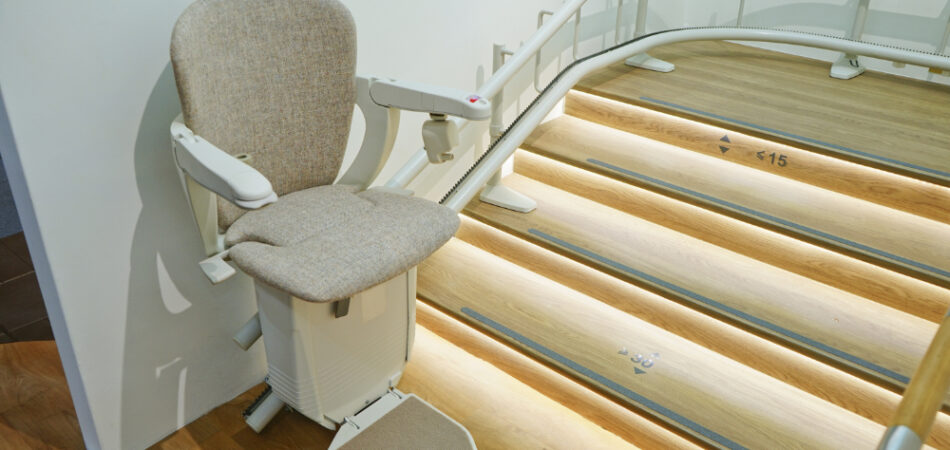
A straight stairlift may be appropriate where the rail follows one uninterrupted straight flight. A curved staircase, turns, or certain landing configurations can require a solution designed around that route.
Home modifications that move essential living activities onto one floor are another possibility in some households. The better choice depends on the property and the resident’s goals.
Where Can Long Island Residents Consider Stairlift Service?
Long Island residents across Nassau County and Suffolk County can consider stairlift solutions when stairs interfere with comfortable access between floors. That includes households in communities around Hempstead, Oyster Bay, Huntington, Babylon, and Brookhaven, as well as other parts of the Island.
The important factor is the home’s actual staircase and the resident’s accessibility needs.
What Can Happen If Stair Accessibility Problems Are Ignored?
Ignoring stair accessibility problems can gradually make portions of a Long Island home less practical for the person experiencing mobility limitations. Rooms may be used less often, household routines may change, and greater assistance may be needed simply to move between levels.
Waiting can also turn an accessibility decision into a rushed one. Exploring stairlift options earlier gives households more opportunity to understand the staircase, compare suitable approaches, and decide what works for their situation without unnecessary pressure.
Frequently Asked Questions About Stairlifts on Long Island
Can a stairlift help someone remain independent at home on Long Island?
Yes, a stairlift can support independent living when stairs are a primary obstacle to using different levels of the home. By providing seated powered travel along the staircase, it can help residents access bedrooms, bathrooms, living spaces, or other floors without having to climb that flight on foot.
Are stairlifts suitable for older Long Island homes?
They may be, but suitability depends on the individual staircase rather than simply the home’s age. Older properties across Nassau and Suffolk counties can have very different stair widths, turns, landings, and surrounding layouts. An evaluation can determine which stairlift options are appropriate for the specific configuration.
Can stairlifts work in Long Island split-level homes?
Stairlifts may be an option for split-level homes, depending on how the stair sections are configured and which levels need to be connected. Because split-level properties can have several shorter stair runs, homeowners should have the complete access route considered rather than focusing on only one section.
What is the difference between straight and curved stairlifts?
A straight stairlift is intended for a straight staircase route, while a curved solution accommodates staircases involving bends, turns, or configurations that cannot be served by a simple straight rail. The staircase itself should be evaluated before deciding which type is appropriate.
Do Nassau County homeowners need a home assessment before choosing a stairlift?
A staircase assessment is a practical step because equipment needs depend on the home’s layout and intended user. Measurements, turns, landing areas, nearby obstacles, and entry and exit points can all affect stairlift selection. Homeowners should avoid assuming a model will fit based solely on photographs or general dimensions.
Can a stairlift be useful if I can still climb stairs?
Yes, someone does not necessarily need to have completely stopped using stairs before exploring a stairlift. If stair climbing is becoming a consistent barrier to accessing parts of a Suffolk County home, considering options earlier can provide more time to evaluate what arrangement best supports everyday routines.
Will a stairlift solve every home accessibility issue?
No. A stairlift specifically addresses travel along a staircase and does not automatically resolve other accessibility challenges throughout a home. Residents should consider how they move through bedrooms, bathrooms, entrances, hallways, and other spaces when evaluating their broader independent-living needs.
When should Long Island families start discussing stairlift options?
Families should consider discussing stairlift options when difficulty with stairs begins regularly affecting access to important rooms or normal routines. Starting the conversation before the problem becomes urgent allows more time to understand the home’s staircase, the resident’s needs, and the available solutions.
Maintain Access to More of Your Long Island Home
Independent living often depends on whether the home continues to work for the person living there. For Long Island residents facing increasing difficulty with stairs, the right stairlift solution can help keep important areas of a familiar multi-level home accessible.
We can help you understand the stairlift options that fit your home’s layout and your accessibility goals.
Make Every Floor of Your Home More Accessible
Get guidance based on your staircase, your home, and your mobility needs.