Installing a stairlift can make a multi-level Long Island home easier and safer to navigate, but choosing the right system involves more than selecting a chair and attaching it to the stairs. Local homes range from compact houses with straightforward staircases to older properties with narrow, curved, or unusually configured stairs.
The right installation starts with understanding the staircase, the rider’s needs, available space, power requirements, and how the lift will affect everyday movement through the home.
Quick answer: The top considerations when installing a stairlift on Long Island include whether the staircase is straight or curved, the amount of usable stair and landing space, the rider’s mobility needs, safe entry and exit points, electrical access, and professional measurements. Homeowners should also consider whether other household members need to use the stairs comfortably after installation.
What Long Island homeowners should know
-
Stairlifts are generally mounted to the staircase rather than directly to the wall, so the dimensions and configuration of the stairs are especially important.
-
Older homes in communities such as Huntington, Hempstead, and Oyster Bay can have staircase layouts that require careful measurement before selecting equipment.
-
A straight staircase and a curved or multi-landing staircase may require substantially different stairlift configurations.
-
The rider’s ability to sit, stand, turn, and transfer safely should influence equipment selection.
-
Long Island homeowners should evaluate both the staircase itself and the space available at the upper and lower landings.
Why Does Stairlift Planning Matter on Long Island?
Stairlift planning matters on Long Island because local housing varies significantly in age, layout, staircase width, and available landing space. A system that works well in one Nassau County home may not be appropriate for a different staircase in Suffolk County, making an in-home assessment an important part of choosing the right configuration.
Communities across the Island include Colonials, Capes, split-level homes, ranches with finished lower levels, and older properties with distinctive floor plans. Staircases may be straight, curved, interrupted by landings, or positioned near doors and hallways.
These differences affect where a stairlift can travel, where the rail can begin and end, and whether the seat can be positioned conveniently when the rider gets on or off.
Long Island Stairlifts helps local homeowners evaluate these practical details. We can assess the staircase and discuss available options based on the home’s layout and the person who will actually use the lift.
What Should Be Evaluated Before Choosing a Stairlift?
The staircase dimensions, configuration, landing areas, rider needs, and surrounding obstacles should all be evaluated before choosing a stairlift. Accurate measurements help determine whether a straight or curved system is appropriate and whether additional features may be useful for the particular home.
Staircase shape
A continuous straight staircase is typically suited to a straight stairlift. Stairs that curve, turn corners, or include intermediate landings may require a system designed around that specific route.
Staircase width
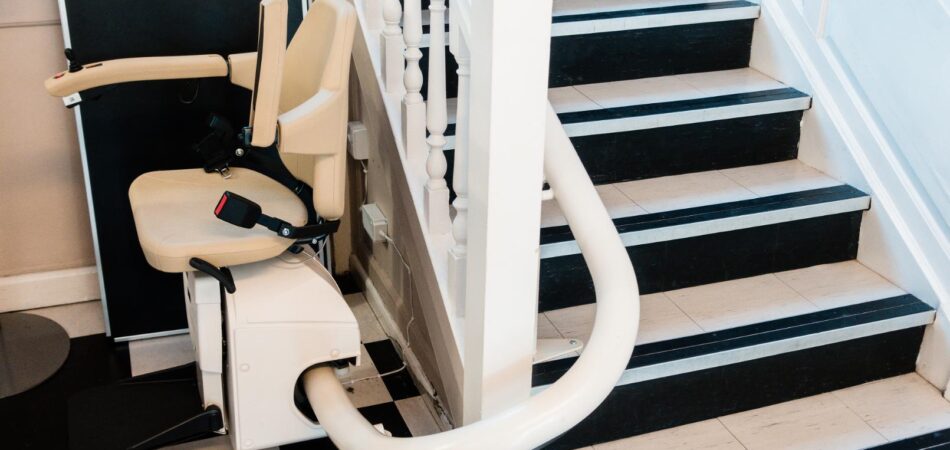
There needs to be enough room for the lift and rider while considering how other people use the stairs. The folded dimensions of the seat, footrest, and armrests can therefore be important in busy households.
Upper and lower landings
A stairlift needs appropriate locations for boarding and exiting. Hallways, doors, furniture, and walking paths near either end of the staircase should be considered.
Rider needs
The user’s mobility, balance, ability to bend the knees, and ease of transferring onto and off the seat can affect which features are practical.
What Local Field Observations Matter During a Stairlift Assessment?
Local stairlift assessments often focus on staircase geometry, available landing room, nearby doors, household traffic patterns, and how comfortably the rider can approach and leave the lift. These are professional field considerations rather than published statistics, and the details can differ substantially from one Long Island property to another.
For example, a homeowner in Garden City may have a relatively traditional staircase with a clear lower landing, while a home elsewhere in Nassau County could have a staircase beginning close to the front entrance.
In Suffolk County, larger homes can still present installation challenges when stairs include turns, multiple landings, or unusual railing arrangements. The amount of floor space in a home does not necessarily predict how straightforward its staircase will be.
How Can a Stairlift Affect Everyday Life at Home?
A properly selected stairlift can make movement between floors more manageable for someone who has difficulty climbing stairs. For Long Island residents who want continued access to bedrooms, bathrooms, laundry areas, finished basements, or other levels, the lift can help reduce dependence on repeated stair climbing.
The practical impact extends to other household members, too.
When the stairlift is not being used, family members may still need enough clearance to walk normally on the staircase. Foldable seats, armrests, or footrests can help preserve usable space, depending on the equipment selected.
What Signs Suggest It Is Time to Consider a Stairlift?
A stairlift may be worth considering when using the stairs has become consistently difficult, tiring, uncomfortable, or dependent on assistance from another person. The goal is to recognize mobility challenges before access between floors becomes a major obstacle to using the home.
Common signs include:
-
Regularly avoiding an upper or lower floor because of the stairs.
-
Needing another person’s assistance while climbing or descending.
-
Frequently stopping to rest midway on the staircase.
-
Feeling unstable while turning at a landing.
-
Relying heavily on the handrail for support.
-
Having difficulty carrying everyday items between floors.
-
Changing daily routines because essential rooms are on another level.
-
Considering major changes to the home primarily because of the staircase.
When Should You Call a Stairlift Professional?
A professional should evaluate the staircase when you are seriously considering installation or are unsure which stairlift configuration fits the home. Homeowners can safely look at obvious issues such as staircase shape and nearby doors, but equipment selection should be based on accurate measurements and the rider’s actual needs.
This becomes especially important with curved stairs, intermediate landings, narrow stairways, or unusual entry and exit areas.
An assessment also gives Long Island homeowners an opportunity to ask how the equipment will operate within their particular floor plan rather than relying on assumptions based on another person’s home.
What Common Long Island Home Features Affect Stairlift Installation?
The most common home features affecting stairlift installation include turns, landings, limited hallway space, staircase width, and nearby doors or walkways. Long Island’s varied housing stock means homeowners in communities from Hempstead to Huntington can encounter very different installation conditions.
1. Straight staircases: These offer a direct route between two levels and may accommodate a straight stairlift when measurements and clearances are appropriate.
2. Curved staircases: A staircase that bends or changes direction requires equipment suited to its shape.
3. Intermediate landings: Split-level layouts and staircases with landings require careful planning because the lift’s travel path may not be a single straight run.
4. Tight entry areas: A staircase positioned near a doorway or narrow hallway can make the lower stopping position especially important.
5. Limited upper landing space: The rider needs an appropriate location to exit at the top, making landing dimensions and nearby obstacles important considerations.
How Should Homeowners Prepare for a Stairlift Installation?
Homeowners should prepare by keeping the staircase accessible, identifying how the rider currently uses the stairs, and noting obstacles at both landings. Long Island households can also use the planning stage to consider how other family members will continue using the staircase after the equipment is installed.
Before an assessment, consider which side of the staircase seems most practical, but avoid assuming that it will necessarily be the best installation side.
Check whether doors open toward the staircase and whether furniture or other household items restrict the landing. Think about where the rider normally approaches the stairs and where they need to go after reaching the other floor.
DIY measuring can provide a rough idea of the available space, but final equipment decisions should rely on measurements appropriate to the selected system.
What Results Should You Expect From a Stairlift Installation?
A stairlift installation should provide a practical way for the intended rider to travel between the floors served by the system. The exact experience depends on the staircase, equipment, rider needs, and available boarding and exit space, so homeowners should expect recommendations tailored to the property rather than a one-size-fits-all solution.
A well-planned system should also account for daily household routines. That includes how the lift is parked, how much stairway space remains when it is folded, and how the user gets on and off at each end.
What Stairlift Installation Mistakes Should Long Island Homeowners Avoid?
The biggest stairlift installation mistakes involve choosing equipment before evaluating the staircase and focusing on the chair while overlooking the rider’s complete travel path. A better approach considers how someone reaches the lift, rides it, exits it, and moves away from the staircase.
Mistake: Assuming every staircase uses the same type of lift.
Consequence: A system designed for a simple straight run may not address turns or landings.
Better approach: Determine the staircase configuration first.
Mistake: Measuring only the stair width.
Consequence: Important landing or clearance issues can be overlooked.
Better approach: Evaluate the complete staircase and both endpoints.
Mistake: Forgetting other household members.
Consequence: The stairway may become less convenient for everyone else.
Better approach: Consider folded dimensions and normal foot traffic.
Mistake: Choosing features without considering the rider.
Consequence: Useful-looking options may not address the person’s actual mobility challenges.
Better approach: Start with the rider’s ability to board, sit, travel, and exit comfortably.
What Is a Common Stairlift Scenario in a Long Island Home?
A common Long Island stairlift scenario involves a resident who can comfortably use the main level but finds the staircase to a bedroom or bathroom increasingly difficult. The family wants to improve access between floors without making assumptions about whether the existing staircase can accommodate a particular lift.
This is not a specific Long Island Stairlifts customer case study. It illustrates why the assessment begins with both the person and the property.
A professional would look at the stair configuration, measure available space, identify obstacles near the landings, and discuss how the resident approaches and exits the staircase. Those details help narrow the appropriate options.
What Stairlift Solutions Are Available for Different Staircases?
Stairlift solutions generally include configurations for straight stairs and options designed for staircases with curves, turns, or landings. The appropriate solution depends on the actual staircase and rider, which is why Long Island homeowners benefit from matching equipment to their property rather than selecting solely from photographs or general descriptions.
A straight system may be suitable when stairs run continuously between floors without turns.
A curved configuration may be considered when the travel path changes direction or must follow a more complex staircase.
Additional equipment features can also help address parking position, stairway clearance, or ease of use depending on the selected system.
How Do You Compare Your Stairlift Options?
The best way to compare stairlift options is by matching each system to the staircase, rider, and household rather than treating price or appearance as the only deciding factor. Long Island homeowners should compare the complete installation, including rail configuration, space requirements, controls, boarding position, and everyday usability.
| Consideration | Straight Stairlift | Curved Stairlift |
|---|---|---|
| Staircase | Continuous straight run | Curves, turns, or certain complex layouts |
| Rail | Follows straight stairs | Designed around the staircase route |
| Planning | Requires accurate measurements | Requires detailed staircase measurements |
| Best choice | Depends on home and rider | Depends on home and rider |
Neither category is automatically better. The staircase determines which approach is appropriate.
What Long Island Areas Can Be Considered for Stairlift Service?
Long Island stairlift needs extend across Nassau County and Suffolk County, including communities such as Hempstead, Garden City, Huntington, and Oyster Bay. Homes throughout the region vary considerably, so the appropriate stairlift setup should be based on the individual staircase rather than assumptions about a particular neighborhood or house style.
What Can Happen If Stairway Mobility Problems Are Ignored?
Ignoring increasing difficulty with stairs can gradually limit how much of a home a resident comfortably uses. For Long Island homeowners with bedrooms, bathrooms, laundry rooms, or living spaces on different floors, avoiding the staircase may mean changing routines or relying more heavily on assistance from others.
Waiting can also make decisions feel more urgent later. Exploring options earlier gives the household time to understand the staircase, compare suitable equipment, and determine what arrangement makes sense.
FAQ
Can a stairlift be installed on a narrow staircase on Long Island?
A stairlift may be possible on some narrow Long Island staircases, but suitability depends on actual measurements, equipment dimensions, and the rider. Available stair width is only one consideration. A professional assessment should also account for rail placement, folded equipment dimensions, and safe boarding and exiting areas.
Do stairlifts attach to the wall?
Stairlifts are generally designed to attach to the staircase rather than relying on the wall for support. That means homeowners should not assume wall construction alone determines whether installation is possible. The stair configuration, dimensions, selected equipment, and installation requirements need to be evaluated for the individual property.
Can a stairlift work on curved stairs in Nassau County?
Yes, stairlift options exist for curved and turning staircases, but the appropriate configuration depends on the exact route. Nassau County homes can have stairs with bends, intermediate landings, or unusual layouts, so detailed measurements are especially important when the staircase is not a simple straight run.
Are stairlifts suitable for older Long Island homes?
Stairlifts may be suitable for older Long Island homes when the staircase and surrounding areas can accommodate the selected system. Older properties can have narrow stairs, compact landings, or distinctive layouts, making an individual assessment more useful than judging suitability based simply on the home’s age.
How do I know whether I need a straight or curved stairlift?
A straight stairlift generally serves a continuous staircase without turns, while a curved system is designed for a route that bends or changes direction. The distinction can become less obvious with landings or unusual layouts, so the full staircase should be evaluated before choosing equipment.
Will other people still be able to use the stairs?
Other household members may still be able to use the staircase, depending on stair width, equipment dimensions, and how the stairlift folds or parks. This should be considered during planning, especially in busy Long Island households where the staircase remains a primary route for several family members.
What should Suffolk County homeowners check before a stairlift assessment?
Suffolk County homeowners should note the staircase shape, nearby doors, landing space, and any obstacles around the stairs before an assessment. They should also think about the intended rider’s daily routine, including which rooms they need to reach and how easily they can approach and leave the lift.
Should I measure my Long Island staircase myself?
You can take basic measurements to better understand your staircase, but equipment selection should not depend solely on informal measurements. A stairlift needs to fit the complete route and provide appropriate boarding and exit positions, so accurate professional measurements are valuable before finalizing a system or installation plan.
Make Every Floor of Your Long Island Home More Accessible
The right stairlift starts with a careful look at the person using it and the staircase it needs to serve. We help Long Island homeowners understand their options so they can choose a setup appropriate for their home, mobility needs, and everyday routine.