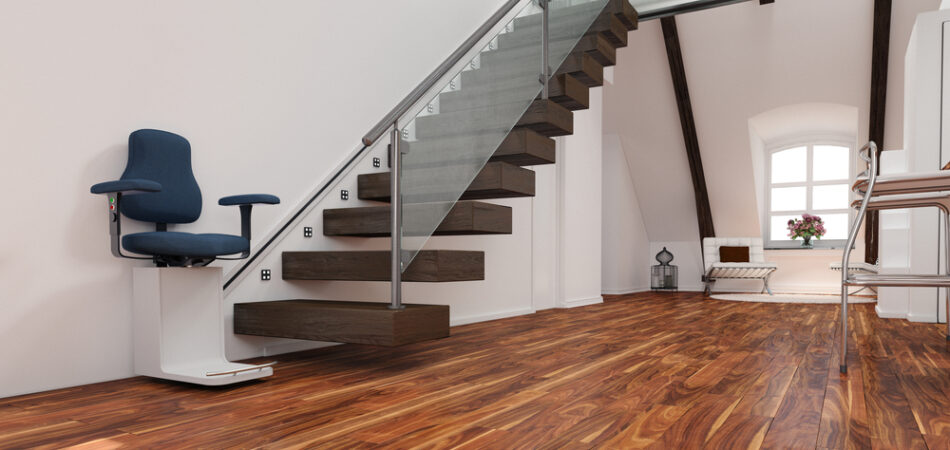
For many Long Island homeowners, stairs can become one of the biggest obstacles to moving comfortably and safely throughout their homes. Whether you live in a traditional two-story house in Nassau County or a split-level property in Suffolk County, navigating stairs can become increasingly difficult with age, reduced mobility, or recovery from an injury.
Installing a stairlift can make it easier to access different floors without making major structural changes to your home. However, choosing the right stairlift requires careful consideration of your staircase, mobility needs, available space, and long-term expectations.
The most important things to consider when installing a stairlift in a Long Island home are staircase configuration, user mobility, safety features, installation requirements, cost, and ongoing maintenance. A professional staircase assessment can help determine whether a straight or curved stairlift is appropriate and identify potential obstacles before installation.
What Long Island Homeowners Should Know Before Installing a Stairlift
-
Staircase design matters. Straight, curved, narrow, and multi-landing staircases may require different stairlift configurations.
-
Older Long Island homes can present installation challenges. Properties in communities such as Huntington, Garden City, and Rockville Centre may have staircase layouts that require careful measurement.
-
Stairlifts typically attach to the staircase rather than the wall. This can reduce the need for extensive structural modifications.
-
Safety and accessibility should guide the decision. Seat dimensions, weight capacity, controls, and the user’s ability to transfer safely are essential considerations.
-
Professional installation and maintenance are important. Proper measurements, secure mounting, and operational testing help support dependable performance.
At Long Island Stairlifts, we understand that every home and staircase presents different accessibility considerations. Our goal is to help homeowners understand their options so they can make informed decisions about improving mobility throughout their homes.
1. Evaluate Your Staircase Layout and Available Space
The staircase layout is one of the most important factors in determining which stairlift will fit your Long Island home. Straight staircases generally accommodate standard straight stairlifts, while stairs with turns, intermediate landings, or spiral sections typically require a curved rail designed for the specific staircase.
Many homes throughout Nassau and Suffolk counties feature architectural details that influence installation.
Straight Staircases
Straight stairlifts are designed for staircases that travel in one continuous direction without turns or curved sections.
They are often suitable for homes with traditional stairways and can be simpler to measure and install than custom curved systems.
Curved Staircases
Curved stairlifts accommodate staircases with bends, turns, or changes in direction.
Homes in communities such as Oyster Bay and Port Jefferson may feature staircase designs that require customized rail configurations.
Because curved rails must match the staircase geometry, accurate measurements are especially important.
Narrow Staircases
Narrow staircases require additional consideration to ensure the lift does not create unnecessary obstacles for other household members.
Important measurements include:
-
The overall staircase width.
-
The distance between the railing and the opposite wall.
-
Clearance at the top and bottom landings.
-
Space available when the seat and footrest are folded.
-
Doorways or hallways near the staircase.
A professional assessment can help determine whether a stairlift can operate safely without significantly restricting access.
2. Consider the User’s Mobility and Physical Needs
The user’s mobility needs should determine which stairlift features are prioritized. For Long Island residents experiencing arthritis, balance difficulties, limited leg strength, or reduced endurance, the right stairlift should support comfortable seating, safe transfers, and simple operation.
Not every stairlift is appropriate for every mobility condition.
Seating and Comfort
Consider the seat width, cushioning, back support, and available legroom.
A seat that feels comfortable during a brief demonstration may not necessarily provide adequate support for someone with significant joint stiffness or difficulty maintaining an upright position.
Weight Capacity
Every stairlift has a manufacturer-specified weight capacity.
Choose equipment that safely accommodates the intended user without exceeding its operating limits. Some users may require a heavy-duty model with additional seating space and support.
Getting On and Off the Stairlift
Safe transfers are particularly important.
Swivel seats, accessible controls, and properly positioned armrests can make entering and exiting the lift easier.
For individuals who cannot sit upright independently or transfer safely, an occupational therapist or qualified mobility professional may need to evaluate whether a seated stairlift is appropriate.
3. Understand Stairlift Safety Features
Stairlift safety features help protect users and other household members during everyday operation. When selecting a stairlift for a Long Island home, prioritize equipment with reliable restraint systems, obstruction detection, controlled movement, and features that support safe boarding and exiting.
Important safety features include:
-
Seat belts: Help keep the user securely positioned while traveling.
-
Obstruction sensors: Stop the lift when an object interferes with its path.
-
Swivel seats: Allow users to turn toward a safer landing position before standing.
-
Footrest sensors: Detect certain obstacles near the lower portion of the lift.
-
Battery backup: Allows many models to continue operating during a power outage, subject to battery condition and charge.
-
Lockable controls: Help prevent unauthorized use, particularly in households with children.
Safety considerations are especially relevant in multigenerational homes where several people regularly use the staircase.
We recommend evaluating safety features alongside the user’s physical abilities rather than choosing a model based only on appearance or price.
4. Plan for Long Island Power Outages and Seasonal Conditions
Battery backup is an important consideration for stairlift installations in Long Island homes because coastal storms, heavy winds, and winter weather can interrupt electrical service. A battery-powered stairlift may remain usable during an outage, although its operating time and number of trips depend on the model and battery condition.
Residents in coastal communities such as Long Beach, Freeport, and Bay Shore are familiar with the disruptions that severe weather can bring.
A dependable stairlift setup should account for these conditions.
Battery and Charging Requirements
Many modern stairlifts use rechargeable batteries that charge when the lift is parked at designated charging points or through a continuous charging system.
Homeowners should understand:
-
Where the stairlift charges.
-
How to identify charging problems.
-
What happens when household power is interrupted.
-
How often the batteries may require replacement.
-
What warning indicators mean.
For homes where the user depends heavily on the stairlift, it is also sensible to establish a backup accessibility plan for extended outages.
5. Know the Warning Signs That a Stairlift May Be Needed
A stairlift may be worth considering when climbing stairs becomes painful, exhausting, or unsafe for someone living in a multilevel Long Island home. Recognizing mobility difficulties early allows homeowners to explore accessibility improvements before stair use becomes a significant daily obstacle.
Common warning signs include:
-
Holding tightly to the handrail while climbing or descending.
-
Stopping frequently on the staircase to rest.
-
Experiencing knee, hip, or back pain when using stairs.
-
Avoiding bedrooms, bathrooms, or living spaces on another floor.
-
Feeling dizzy, unsteady, or fearful on the stairs.
-
Having a previous fall or near-fall on the staircase.
-
Needing another person’s assistance to navigate between floors.
These signs do not automatically mean a stairlift is the only solution. However, they suggest that a mobility assessment and professional staircase evaluation may be worthwhile.
6. Understand Stairlift Installation Requirements
Professional stairlift installation involves measuring the staircase, confirming the appropriate rail configuration, securely mounting the equipment, and testing its operation. For Long Island homeowners, installation planning should also consider stairway clearance, electrical access, landing space, and applicable local requirements.
Does Installing a Stairlift Require Major Remodeling?
In many cases, no.
Most residential stairlifts use mounting brackets attached to the stair treads or supporting staircase structure rather than requiring extensive changes to the walls.
However, installation requirements vary depending on the staircase and equipment.
Older properties in communities such as Hempstead and Hicksville may benefit from additional inspection of stair tread condition and structural stability before mounting.
Are Permits Required?
Permit requirements can vary by municipality, equipment type, and installation scope.
Long Island homeowners should confirm applicable requirements with their local building department or installation professional. Requirements in the Town of Huntington, Town of Hempstead, and other municipalities should not be assumed to be identical.
Electrical modifications, if needed, should be completed by appropriately qualified professionals.
7. Compare Straight and Curved Stairlift Costs
Stairlift installation costs depend primarily on staircase complexity, equipment specifications, customization, and installation requirements. Straight stairlifts are generally less expensive than curved systems because curved rails require additional design and manufacturing work.
| Cost Factor | Straight Stairlift | Curved Stairlift |
|---|---|---|
| Rail configuration | Standard straight rail | Custom-fitted curved rail |
| Staircase compatibility | Straight runs | Turns, bends, and certain landings |
| Installation complexity | Generally lower | Generally higher |
| Equipment cost | Usually lower | Usually higher |
| Planning requirements | Standard measurements | Detailed staircase measurements |
Additional factors that may affect pricing include seat upgrades, higher weight capacities, powered swivel seats, folding rails, and electrical work.
Long Island homeowners should request an itemized estimate that explains the equipment, installation, warranty coverage, and potential maintenance expenses.
The lowest initial quote may not represent the best long-term value if important safety or service considerations are excluded.
8. Plan for Stairlift Maintenance and Long-Term Reliability
Regular stairlift maintenance helps support safe operation, reliable performance, and equipment longevity. In Long Island homes, routine care should include checking for visible obstructions, monitoring battery charging indicators, keeping the rail clear, and following the manufacturer’s maintenance schedule.
Simple Homeowner Maintenance Checks
Homeowners can safely perform basic visual checks without disassembling the equipment.
These include:
-
Keeping clothing, shoes, and household objects away from the rail.
-
Confirming the charging indicator displays the expected status.
-
Checking that the seat belt operates properly.
-
Watching for unusual noises or changes in movement.
-
Making sure the seat and footrest fold correctly.
-
Reporting error codes or repeated stopping problems.
Do not attempt to adjust safety sensors, modify wiring, or dismantle drive components.
When to Call a Professional
Professional attention is appropriate when the stairlift stops unexpectedly, moves unevenly, makes unusual mechanical noises, or repeatedly fails to charge.
Continuing to operate malfunctioning equipment may create additional safety risks.
For households in Smithtown, Massapequa, and surrounding communities, planning maintenance before a problem interrupts daily access can be particularly valuable when the stairlift is an essential mobility aid.
9. Avoid Common Stairlift Installation Mistakes
The most common stairlift installation mistakes involve choosing equipment without accurate measurements, overlooking user mobility requirements, and failing to plan for ongoing service. Long Island homeowners can reduce these risks by completing a thorough assessment before purchasing equipment.
Mistake: Choosing Based Only on Price
Consequence: The selected stairlift may lack important comfort or accessibility features.
Better approach: Compare safety, fit, maintenance support, and total ownership costs alongside the initial price.
Mistake: Ignoring Landing Clearance
Consequence: The user may have difficulty entering or exiting the stairlift safely.
Better approach: Evaluate transfer space at both ends of the staircase before selecting the rail and seat configuration.
Mistake: Assuming Every Stairlift Fits Every Staircase
Consequence: Equipment may be incompatible with narrow steps, turns, or nearby doorways.
Better approach: Arrange precise measurements and confirm compatibility before installation.
Mistake: Overlooking Future Mobility Needs
Consequence: A stairlift that works today may become less suitable if the user’s physical abilities change.
Better approach: Consider foreseeable mobility changes and discuss them with a qualified professional.
10. Consider a Common Long Island Home Accessibility Scenario
A common Long Island stairlift installation scenario involves a homeowner who can comfortably move around the main floor but struggles to reach an upstairs bedroom or bathroom. This situation can occur in two-story homes throughout communities such as Levittown, East Meadow, and Commack.
The homeowner may begin avoiding the staircase, sleeping downstairs, or relying on family members for assistance.
Before selecting a stairlift, the household should evaluate the staircase configuration, the user’s transfer abilities, and the space available at each landing.
If the staircase is straight and has adequate clearance, a standard straight stairlift may be suitable. If the staircase includes turns or intermediate landings, a curved model may be necessary.
The expected result is easier access between floors, with less physical effort required to climb stairs. Actual suitability depends on the user’s needs and the home’s layout.
11. Explore Stairlift Options for Your Long Island Home
The best stairlift solution depends on the home’s staircase and the mobility needs of the person using it. Long Island homeowners should compare straight, curved, and specialized stairlift configurations before making a final decision.
Straight Stairlift Installation
A straight stairlift is designed for a staircase without bends or turns.
It can be a practical option when the staircase has adequate width and clear boarding areas.
Curved Stairlift Installation
A curved stairlift uses a rail configured for staircases with changes in direction.
This option may be appropriate for homes with winding staircases or intermediate landings.
Heavy-Duty Stairlifts
Heavy-duty models are designed for users who need additional weight capacity or seating space.
Exact specifications vary by manufacturer.
Stairlift Repair and Maintenance
Existing stairlifts may require battery replacement, component repair, or professional servicing as they age.
Homeowners should confirm that replacement parts and qualified service support are available for their equipment.
Ready to explore your options? Contact us to discuss your staircase layout and the features that matter most for your home.
12. Compare Buying, Renting, and Other Accessibility Solutions
Buying a stairlift is often worth considering for long-term mobility needs, while renting may be appropriate for temporary situations if a suitable rental model is available. Long Island homeowners should compare expected duration of use, staircase complexity, equipment availability, and total costs before deciding.
| Option | Potential Advantage | Main Consideration |
|---|---|---|
| Purchase | Suitable for ongoing use | Higher upfront expense |
| Rental | May suit short-term recovery | Availability and rental terms vary |
| Used or refurbished lift | Potentially lower initial cost | Compatibility, condition, and service support |
| Home modification | May address broader accessibility needs | Can require significant construction |
For homeowners recovering from surgery, temporary access needs may justify exploring rental availability.
For residents planning to age in place, purchasing a stairlift may offer a more practical long-term solution.
We encourage homeowners to evaluate the full cost of each option, including installation, removal, maintenance, and any necessary modifications.
13. Stairlift Installation Across Nassau and Suffolk Counties
Stairlift installation considerations vary across Long Island because homes differ in age, staircase design, floor plans, and accessibility needs. Properties in Nassau County communities such as Garden City, Mineola, and Rockville Centre may present different layouts from homes in Suffolk County communities such as Huntington, Smithtown, and Patchogue.
Regardless of location, an accurate staircase assessment and careful equipment selection are essential.
14. Understand the Cost of Delaying a Stairlift Installation
Delaying a stairlift installation can make everyday activities more difficult when a household member already struggles with stairs. For Long Island residents who depend on upper-floor bedrooms or bathrooms, continued difficulty navigating stairs may lead to reduced access, greater reliance on caregivers, or increased fall exposure.
Waiting may also result in temporary living arrangements that are inconvenient for the household.
A stairlift is not necessary for everyone, and it does not eliminate every fall risk. However, evaluating accessibility options before stair use becomes unmanageable can provide more time to compare solutions and make a thoughtful decision.
Concerned about stair safety at home? Speak with us about evaluating your staircase and understanding your available options.
Frequently Asked Questions About Stairlift Installation in Long Island Homes
How much does it cost to install a stairlift in Long Island?
Stairlift installation costs in Long Island depend on whether the staircase is straight or curved, the equipment selected, and any additional installation requirements. Custom curved systems generally cost more than straight models. An in-home assessment and itemized estimate provide a more reliable cost expectation than a generic price range.
Can a stairlift be installed in an older Nassau County home?
Yes, a stairlift can often be installed in an older Nassau County home if the staircase has sufficient structural support, clearance, and suitable landing areas. Older homes may require additional evaluation of stair treads, rail placement, or electrical access. A professional assessment determines which configurations are practical.
Do stairlifts work during power outages on Long Island?
Many modern stairlifts use rechargeable batteries that allow operation during temporary electrical outages. This can be helpful during coastal storms or severe winter weather. However, operating capacity depends on battery condition, charge level, and equipment design. Homeowners should confirm the backup capabilities of their specific model.
How long does stairlift installation take?
Straight stairlift installations can often be completed within several hours once the equipment and site are ready. Curved stairlifts generally require additional time for measurement and custom rail production before installation. The complete timeline depends on equipment availability, staircase complexity, and any necessary preparatory work.
Will a stairlift damage the walls or staircase?
Most residential stairlifts are mounted to the staircase rather than directly to the wall. Installation typically requires secure attachment points in the stair structure, which may leave holes if the equipment is later removed. The extent of any repair work depends on the mounting method and staircase materials.
Are stairlifts suitable for narrow staircases in Suffolk County homes?
Some narrow staircases in Suffolk County can accommodate stairlifts, but suitability depends on the available width, rail position, folded equipment dimensions, and safe access for other occupants. A compact seat or folding footrest may help. Professional measurements are necessary before confirming whether installation is feasible.
Does Medicare pay for stairlift installation in Long Island homes?
Original Medicare generally does not cover stairlifts because they are typically considered home modifications rather than covered durable medical equipment. Certain Medicare Advantage plans or other assistance programs may offer limited benefits depending on eligibility and plan terms. Homeowners should verify current coverage directly with their insurer.
Can two people use the same stairlift?
Yes, multiple household members can generally use the same stairlift if each person meets the manufacturer’s requirements and can operate the equipment safely. The seat, weight capacity, controls, and transfer arrangement must accommodate each user. A shared stairlift should be evaluated against the needs of everyone who plans to use it.
How often should a stairlift be serviced in a Long Island home?
Stairlift servicing should follow the manufacturer’s recommended schedule, which may vary by model and frequency of use. Regular visual checks can help identify obstructions, charging issues, or unusual operation between service visits. Professional maintenance is especially important when a resident depends on the lift for daily access.
Make Your Long Island Home Safer and More Accessible
Choosing a stairlift involves more than selecting a seat and rail. Staircase measurements, user comfort, safety features, installation requirements, and long-term maintenance all influence whether the equipment will meet your needs.
For homeowners throughout Nassau and Suffolk counties, careful planning can help preserve access to important living spaces while supporting greater independence at home.
At Long Island Stairlifts, we believe homeowners should have clear information about their accessibility options before making a decision.
Take the Next Step Toward Easier Stair Access in Your Long Island Home
Find out which stairlift configuration may be suitable for your staircase, mobility needs, and household.
Contact us to discuss your options and take the next step toward safer, more comfortable access between floors.